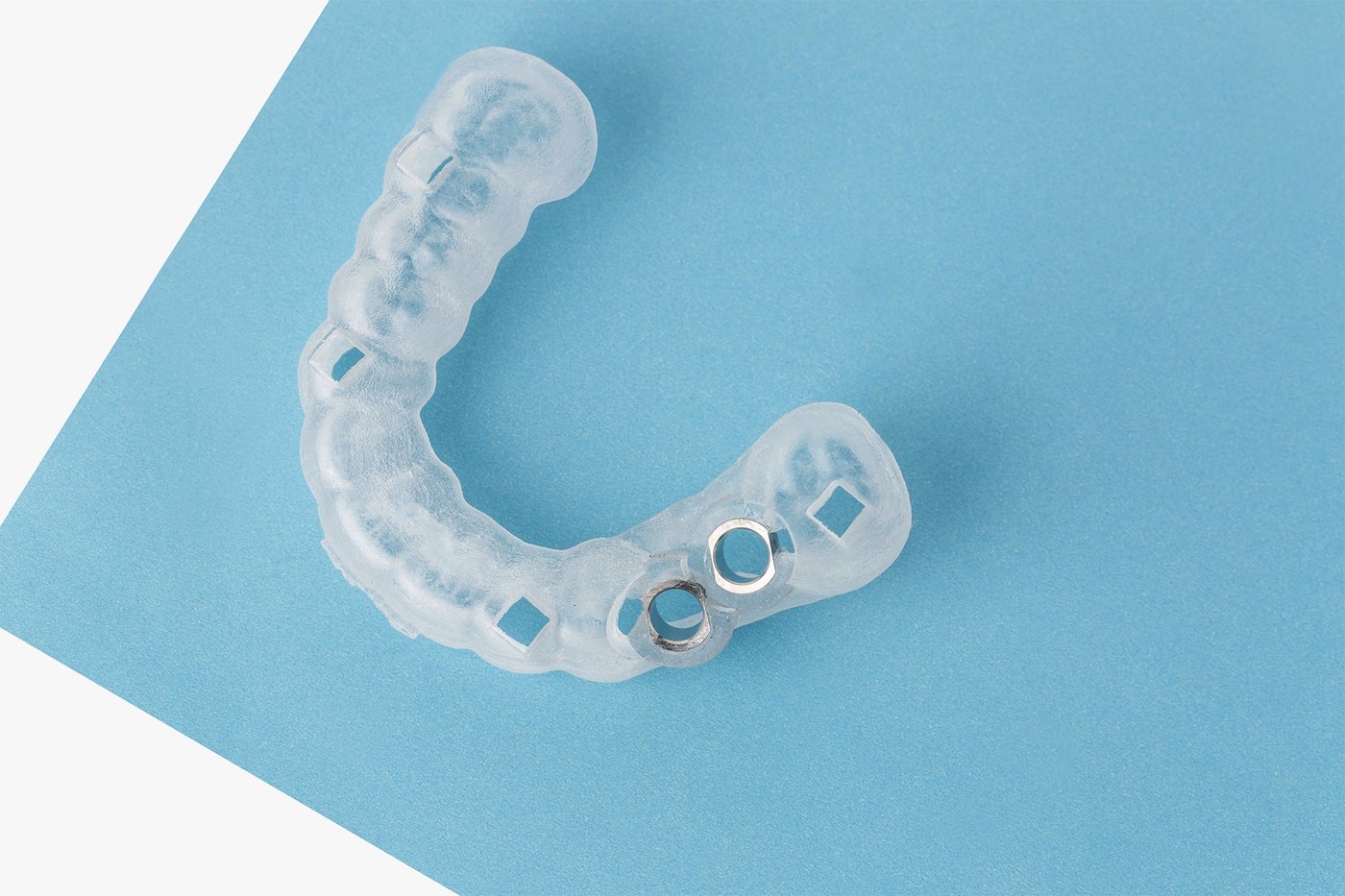
Surgical guides and temporary teeth,
printed on an everyday FDM machine — biocompatible, cheaper, and faster.
3D printing is already common in dentistry — mostly on resin.
Resin printing hardens a liquid with light, layer by layer. It's precise, but the printers are expensive and every part has to be washed and cured before it can be used — steps that slow the workflow down and add to the cost of each part.
FDM is the cheaper, faster, and more versatile alternative, and we compound the material for it — a medical grade engineered for the mouth: biocompatible, printable, durable, and clear.
PLA is inherently biocompatible; ISO 10993 testing and MFDS Class II registration for short-term oral use are in progress.

Patient-specific guides that position an implant during surgery, printed for a single case.
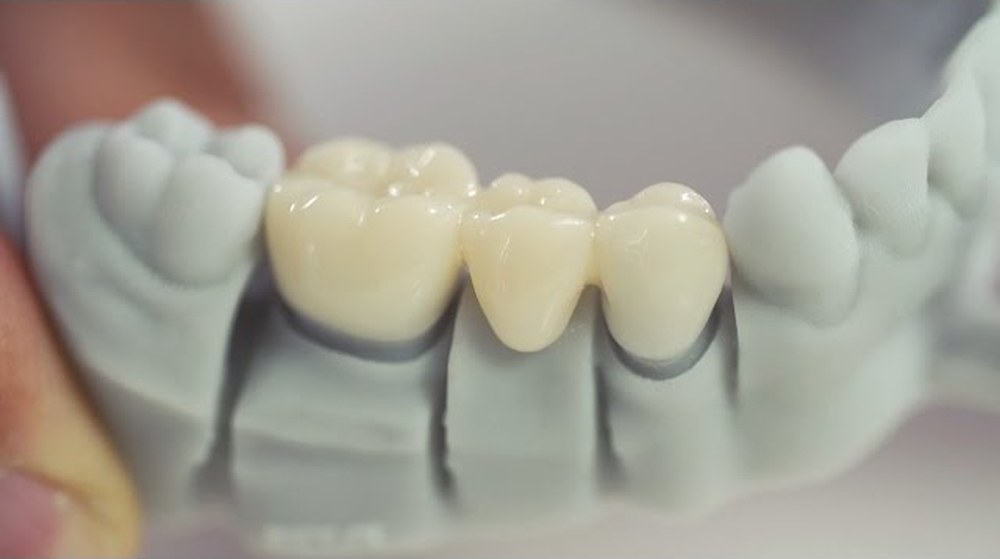
Temporary crowns and bridges, printed while the permanent restoration is made.
Samples and technical data on request.