A five-year service life — and if a buoy is ever lost or breaks,
it biodegrades in seawater instead of lingering as marine debris.
Korea banned styrofoam buoys in 2023 — the replacement was just another plastic.
Styrofoam fragments into marine microplastics, so the Korean government banned it from aquaculture. But with no real alternative, its replacements are still conventional plastic — PP and HDPE — that doesn't break down at sea. The microplastic problem never left, and regulators are still searching for an answer. Re:Ocean is one: the working life of a plastic buoy, then full biodegradation in seawater.
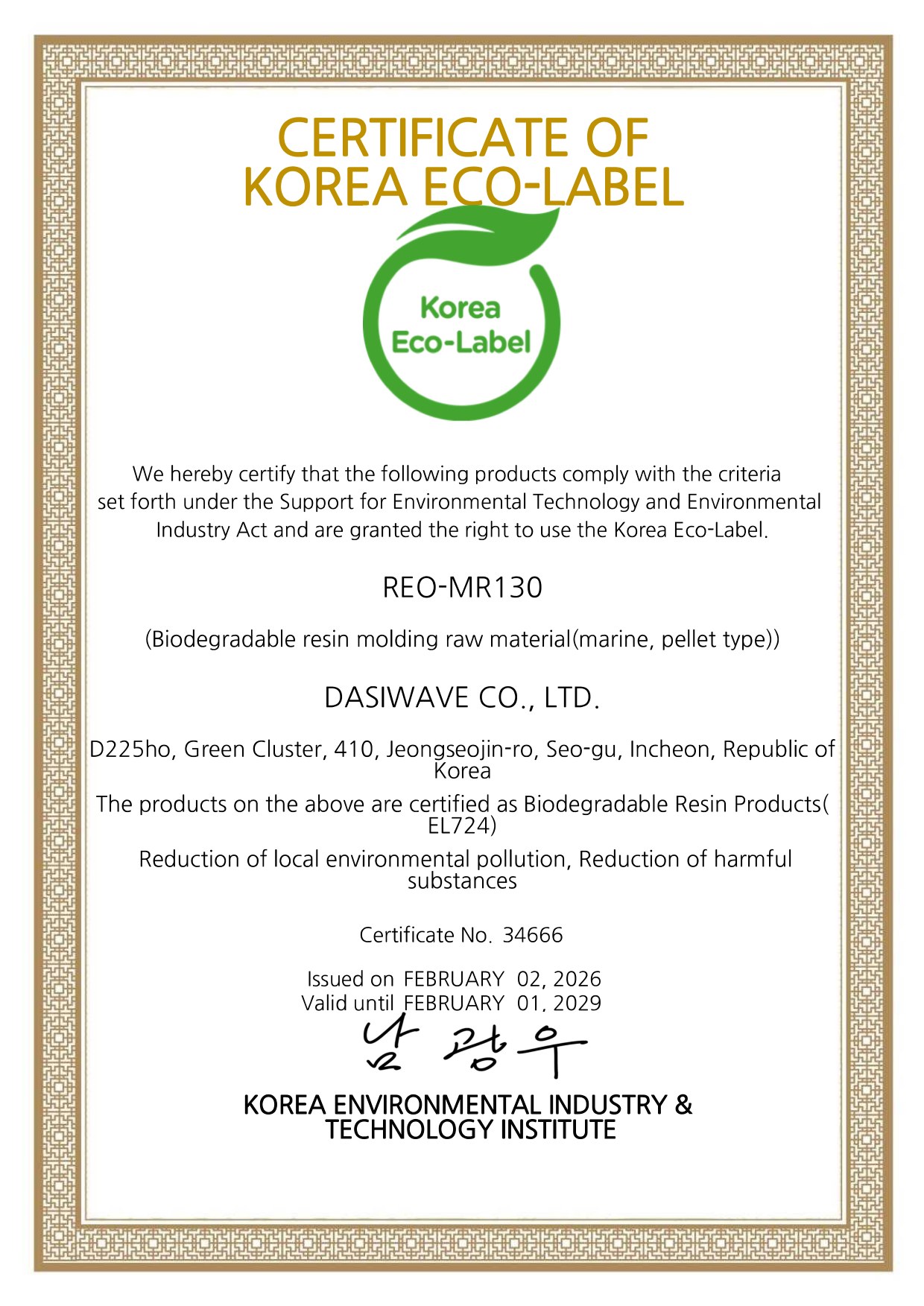
Korea's first and only bio-material buoy,
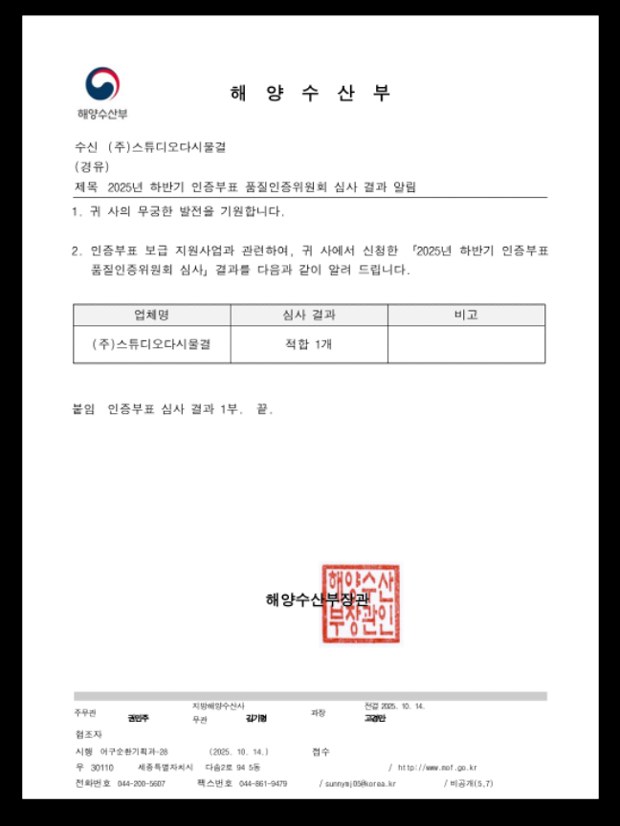
certified by the Ministry of Oceans and Fisheries (MOF)
to the same standard as petroleum buoys.
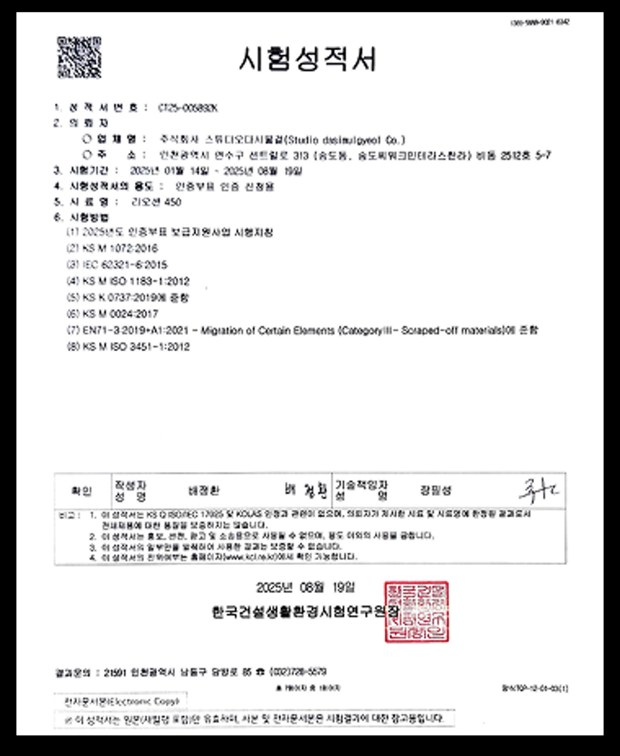
Tested to petroleum-buoy criteria — impact drop, joint & ring fatigue, thermal cycling and marine exposure — with heavy metals, organotin and flame retardants all non-detect, and marine ecotoxicity cleared to ISO 5430.


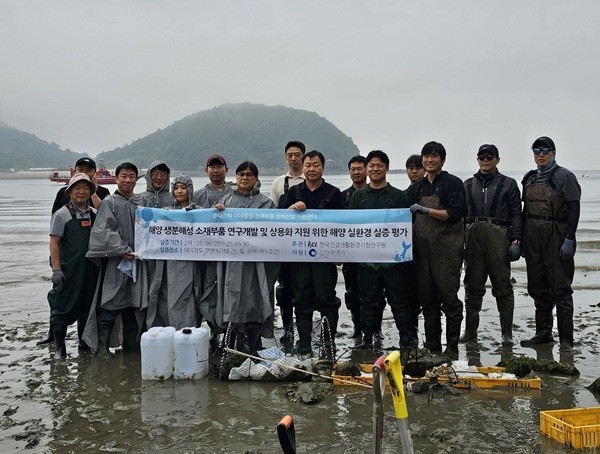
Two rounds of six-month real-sea exposure — tidal-flat sediment and open seawater — confirming durability and biodegradation in service. 2025–26, with KCL.

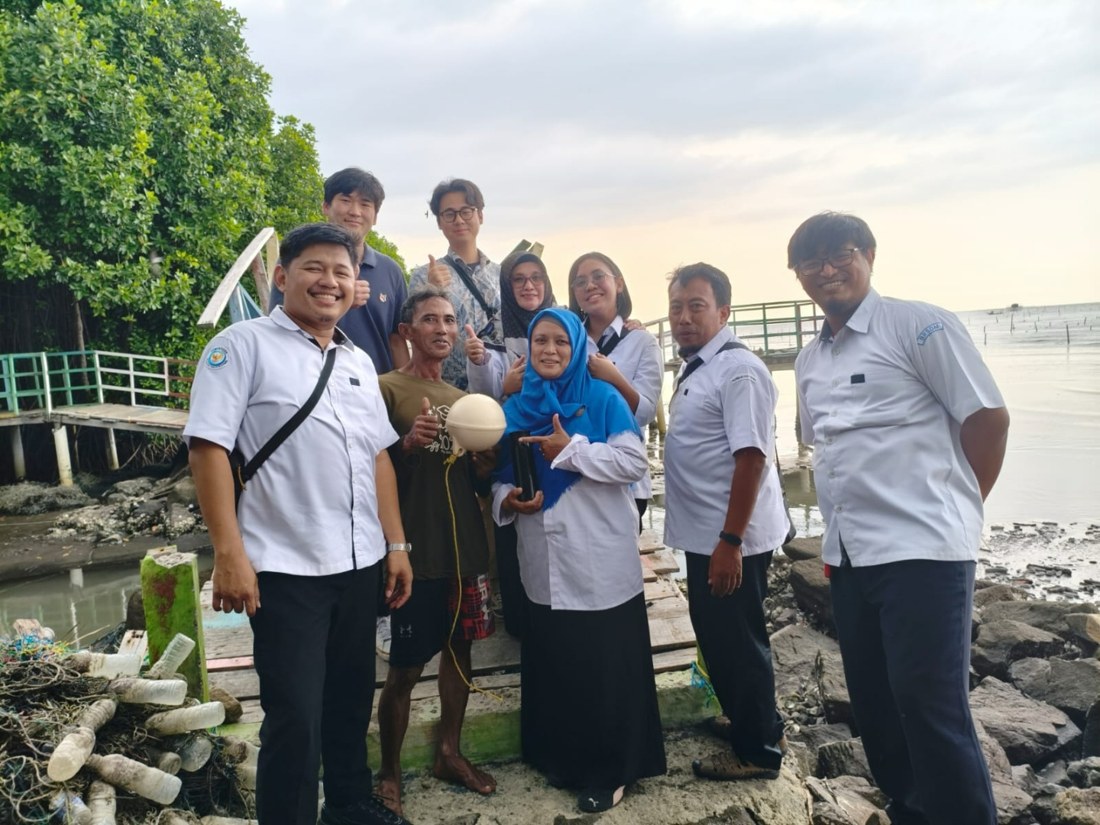
1,200 buoys replacing PET-bottle floats on seaweed farms across two sea areas near Jakarta — deploying from 2026 with Politeknik AUP, under the KOICA CTS program.
A marine-grade compound engineered for buoy durability — injection-moldable,
with the toughness and heat resistance a working buoy needs.
Free samples available — up to 50 kg.